
Freezing Temps & Ice in El Paso: How Cold Weather Impacts Commercial HVAC Systems
And what you can do about it.
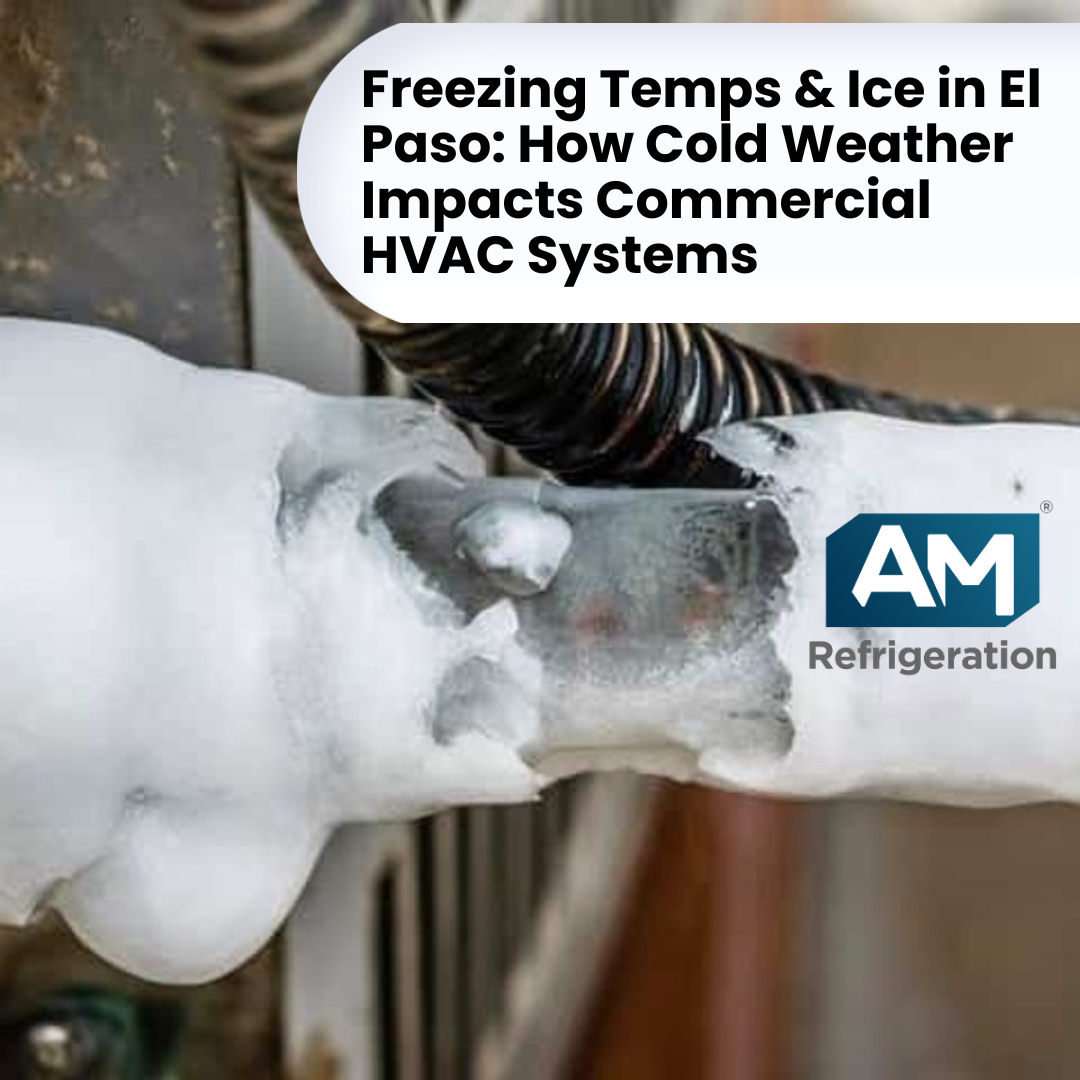
El Paso isn’t known for harsh winters, which is exactly why freezing temperatures and potential ice events can catch building owners off guard. When cold snaps roll through the Borderland, commercial HVAC systems are often pushed outside the conditions they’re typically designed to operate in. Without preparation, even a short freeze can lead to equipment damage, downtime, and costly repairs.
Here’s how freezing weather impacts commercial HVAC systems and what to watch for when temperatures drop.
1. Ice Buildup on Rooftop Units
Most commercial HVAC systems in El Paso are rooftop units (RTUs). During freezing conditions, moisture from humidity, rain, or condensation can freeze on coils, fans, and exterior components.
Ice buildup can:
• Restrict airflow
• Reduce heat transfer efficiency
• Place excess strain on motors and fans
• Lead to unbalanced operation or vibration
If ice is allowed to accumulate, the system may struggle to maintain indoor comfort or shut down entirely as a protective measure.
2. Frozen Coils and Heat Exchangers
When temperatures drop below freezing, evaporator or condenser coils can freeze if airflow is restricted or if the unit cycles improperly.
Frozen coils can:
• Crack or warp as ice expands
• Reduce heating capacity
• Cause system short cycling
• Lead to long term efficiency loss
In extreme cases, coil damage may require full replacement, which is a major and avoidable expense.
3. Drain Line and Condensate Pan Freezing
Commercial HVAC systems rely on condensate drain lines to remove moisture. During cold weather, standing water in these lines or pans can freeze.
This can result in:
• Blocked drainage
• Water backing up into the unit
• Interior water damage once temperatures rise
• Corrosion or rust over time
A frozen drain line is one of the most common cold weather issues we see during El Paso freezes.
4. Increased Wear on Electrical Components
Cold temperatures affect more than mechanical parts. Electrical components such as contactors, relays, and control boards can become brittle or less responsive in freezing conditions.
Moisture combined with cold weather increases the risk of:
• Electrical shorts
• Sensor failures
• Fault codes and unexpected shutdowns
These issues often don’t show up immediately. They surface days or weeks later as intermittent failures.
5. Heating Systems Working Overtime
When outdoor temperatures dip well below normal, commercial heating systems are forced to run longer cycles to maintain indoor comfort.
This added demand can:
• Expose existing mechanical weaknesses
• Increase energy consumption
• Accelerate wear on burners, heat exchangers, and motors
• Reveal calibration or airflow issues that weren’t noticeable before
If a system hasn’t been serviced recently, freezing weather tends to find the weak points fast.
Why Cold Weather Prep Matters in El Paso
Because freezing temperatures are relatively rare in our region, many commercial HVAC systems aren’t proactively winterized. That makes preparation and preventative maintenance especially important when cold weather is in the forecast.
A quick professional inspection can help:
• Verify proper airflow and defrost operation
• Check drain lines and freeze protection
• Inspect electrical components
• Ensure heating systems are operating safely and efficiently
Final Thought
Freezing temperatures and ice don’t just create comfort issues. They create risk. For commercial buildings, downtime from HVAC failure can impact tenants, employees, customers, and operations.
If your building experienced freezing conditions this week, now is the right time to have your system inspected. Catching minor cold weather damage early can prevent much bigger problems down the line.